👁 48 views
My sister owed nearly eight hundred thousand dollars.
My parents decided I should sell my wedding venue to save her.
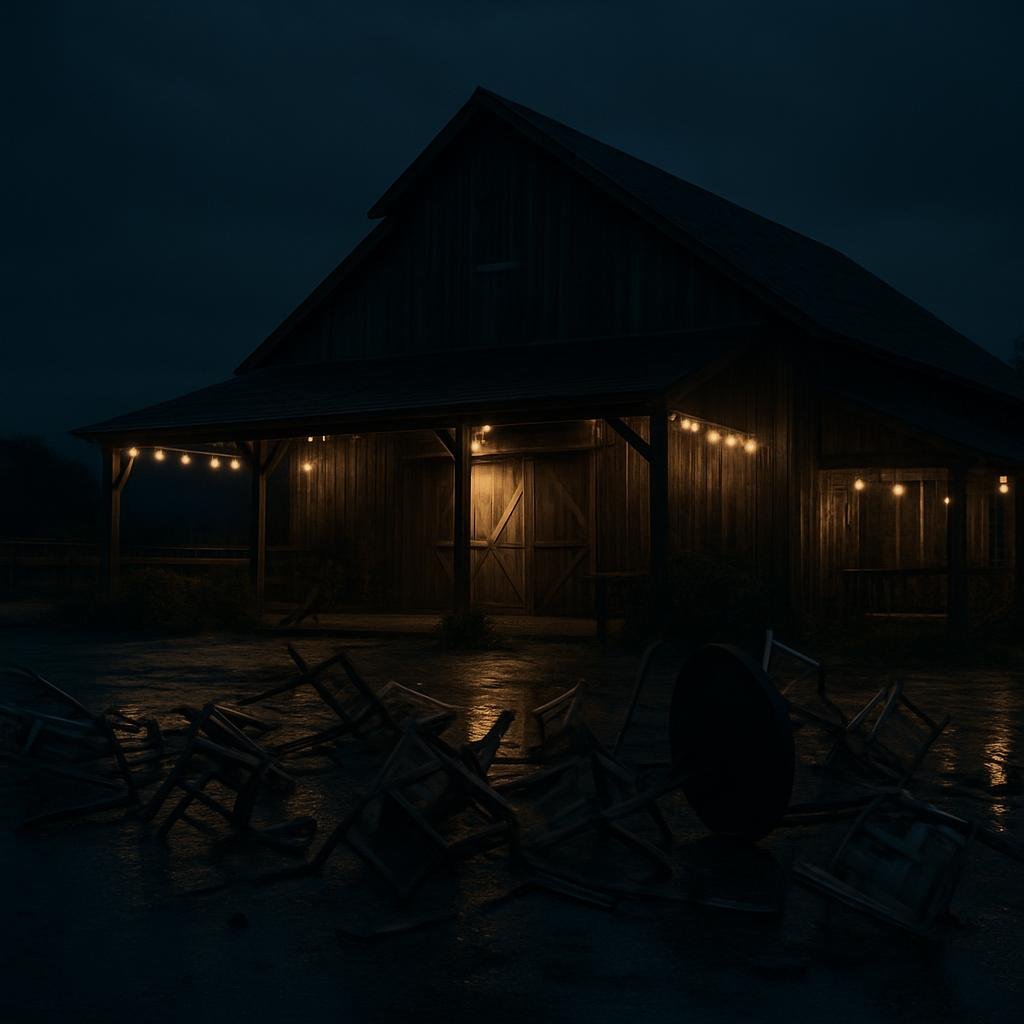
When I refused, they waited until I was gone, broke onto the property, and destroyed the place I had spent eleven years building.
They smashed tables.
Cut electrical lines.
Ruined thousands of dollars in flowers.
And flooded the bridal suite.
My mother called me the next morning and said,
“Now maybe you’ll finally understand that family comes first.”
She thought they had forced me to sell.
What none of them knew was that three weeks earlier, I had signed an agreement that made destroying my venue the worst possible thing they could have done.
My name is Olivia Harper.
I was thirty-six when my family decided my sister’s mistakes were more important than my life’s work.
The property was called Willow & Stone.
It sat on twenty-two acres outside Charlottesville, Virginia.
There was a restored timber barn, a stone ceremony courtyard, a small lake, a bridal cottage, a catering kitchen, and rows of oak trees that turned gold every October.
People saw wedding photographs.
I saw eleven years of work.
When I bought the property at twenty-five, the main barn had holes in the roof and weeds growing through the floorboards.
The bank almost refused to finance it.
My parents thought I was insane.
Dad looked around the place the first time I showed it to him and said,
“You paid money for this?”
I did almost everything slowly because I had no choice.
I refinished wood myself.
I painted walls at midnight.
I worked weekend events for other venues while repairing mine during the week.
For the first two years, I lived in a tiny apartment above the equipment shed because I couldn’t afford rent somewhere else.
The first wedding at Willow & Stone had forty-seven guests.
I still remembered the bride crying when she saw the barn lights come on.
By year five, we were booking weddings a year in advance.
By year eight, nearly every Saturday between April and November was full.
By year eleven, Willow & Stone had twenty-three full-time employees, dozens of seasonal workers, and contracts with photographers, florists, caterers, hotels, and transportation companies across the region.
It was not just a pretty property.
It was an ecosystem.
My younger sister, Sophie, never understood that.
Sophie was three years younger than me.
She had always been charming.
Funny.
Beautiful.
Impulsive.
And absolutely convinced that consequences were temporary things other people would eventually fix.
My parents had spent most of our lives fixing them.
When Sophie crashed her first car at nineteen, Dad bought her another one.
When she quit university, Mom paid for a year-long “reset” in Miami.
When she opened a clothing boutique that closed in fourteen months, my parents covered the lease.
Then Sophie discovered online luxury resale.
For a while, she did well.
She bought designer handbags, jewelry, watches, and limited-edition fashion pieces, then resold them online.
Her social media following grew.
She moved into a glass apartment downtown.
Leased a Porsche.
Started flying business class.
Everyone thought she had finally made it.
Then the money stopped making sense.
Sophie had expanded too fast.
She borrowed against inventory.
Then borrowed more to cover previous loans.
Then used short-term private financing at brutal interest rates to keep the business alive.
By the time she admitted the truth, she owed just under eight hundred thousand dollars.
Some of it was business debt.
Some of it was personal guarantees.
Some of it came from lenders who did not care that she was somebody’s daughter.
My parents called a family meeting.
Of course they did.
It happened at their house on a Tuesday evening.
Dad had printed spreadsheets.
Mom had been crying.
Sophie sat at the table wearing a cream cashmere sweater that probably cost more than my first month’s mortgage payment.
Dad pushed the papers toward me.
“She has thirty days.”
I looked through them.
The numbers were terrible.
“How did this happen?”
Sophie crossed her arms.
“Things got complicated.”
“Seven hundred and eighty-six thousand dollars is more than complicated.”
Mom immediately defended her.
“She was trying to save her company.”
I looked at Sophie.
“With borrowed money?”
She snapped,
“I didn’t ask to be lectured.”
“No. Apparently you asked for almost eight hundred thousand dollars.”
Dad leaned forward.
“That’s why we need to discuss Willow & Stone.”
I stopped turning pages.
“What about it?”
He hesitated for half a second.
Then said,
“You could sell it.”
I stared at him.
Mom took over.
“The property is worth several million now.”
“And?”
“And you could pay off Sophie’s debt and still have money left.”
For a moment, I genuinely thought I had misheard them.
“You want me to sell my business?”
Mom reached across the table.
“Businesses can be rebuilt.”
I pulled my hand away.
“Not like this one.”
Dad sighed.
“Olivia, don’t be emotional.”
That almost made me laugh.
“Twenty-three people work there full-time.”
“They’ll find other jobs.”
“I have weddings booked eighteen months out.”
“Refund them.”
I looked at Sophie.
She said nothing.
That made me angrier than anything else.
“You actually think I should do this?”
She finally looked at me.
“You’d still be rich.”
“I’m not rich.”
“You own twenty-two acres and a luxury wedding venue.”
“I own a business with payroll, loans, taxes, insurance, contracts, and employees.”
She rolled her eyes.
“You always make everything sound harder than it is.”
I sat back.
“Then sell your apartment.”
Silence.
Sophie’s face changed.
“That wouldn’t be enough.”
“Sell the Porsche.”
“It’s leased.”
“Sell the inventory.”
“It’s tied up.”
I nodded.
“So everything you own is untouchable, but mine is available?”
Dad’s voice hardened.
“This is your sister.”
“And that is my company.”
Mom looked wounded.
“Family should mean more than money.”
“It does.”
I pointed at Sophie.
“That’s why she should stop asking family members to sacrifice their lives to erase her decisions.”
Dad slammed his hand onto the table.
“Enough.”
Then came the ultimatum.
Sell Willow & Stone.
Pay Sophie’s lenders.
Or stop expecting help, invitations, holidays, or any relationship with them.
My mother said,
“If you choose a wedding barn over your own sister, don’t expect us to forgive you.”
I stood up.
I picked up my bag.
And I said,
“I’m not choosing a barn over Sophie.”
I looked at my sister.
“I’m choosing not to destroy twenty-three people’s livelihoods because she refuses to face what she did.”
Then I left.
What my family did not know was that Willow & Stone was already changing.
Three weeks before that dinner, I had signed a preliminary partnership and acquisition agreement with Ashford Grand Hotels.
Ashford operated luxury resorts across the East Coast and had been trying to expand into destination weddings.
They wanted Willow & Stone as their flagship countryside venue.
I did not want to sell completely.
So we negotiated something different.
Ashford would acquire sixty percent of the operating company.
I would retain forty percent, remain creative director, and continue managing the venue.
They would fund a second ceremony pavilion, guest cottages, and a larger commercial kitchen.
The deal was worth more than anything my family imagined.
But there was one unusual clause.
Ashford knew that wedding venues were vulnerable to weather, fire, vandalism, and other disruptions.
So the contract included an operational continuity provision.
If a qualifying insured event damaged the property before closing, Ashford could accelerate funding, move booked weddings to partner hotels, and proceed with the transaction at the previously negotiated valuation rather than allow the business to collapse.
My attorney, Rachel Kim, had insisted on it.
At the time, I thought she was being overly cautious.
Then my mother called me four days after the family dinner.
“You have until Friday to reconsider.”
“There is nothing to reconsider.”
“Your father is disgusted with you.”
“That’s unfortunate.”
“Sophie could lose everything.”
“She needs a lawyer.”
“She needs her sister.”
“She needs bankruptcy counsel.”
Mom’s voice turned cold.
“You always were selfish when you thought you were better than us.”
I ended the call.
That evening, I forwarded the voicemail to Rachel.
She replied with one sentence.
Keep everything.
Saturday was supposed to be quiet.
We had no wedding that day because a couple had moved their date to the following month.
Most of my staff were off.
I spent the afternoon in Richmond meeting with an Ashford design team.
At 11:43 that night, my phone vibrated.
MOTION DETECTED: SERVICE GATE.
Then another alert.
BARN WEST ENTRANCE OPEN.
Then another.
BRIDAL COTTAGE.
I opened the security app.
At first, I thought someone was stealing equipment.
Then I recognized my father.
He was carrying bolt cutters.
My mother was behind him.
Sophie was standing beside a rented box truck.
For several seconds, I couldn’t breathe.
Then I switched cameras.
Dad was forcing open the catering-storage door.
Mom was dragging boxes of glass votives and tableware onto the ground.
Sophie entered the floral cooler.
She pulled out buckets of roses, hydrangeas, and greenery prepared for Sunday’s styled photo shoot.
Then she dumped them onto the concrete.
One by one.
My father overturned stacks of chairs.
My mother pulled linen racks down.
Sophie walked through the bridal suite pouring something from a cleaning bucket across the carpet.
Then Dad disappeared behind the building.
Seconds later, water began running beneath the cottage door.
I called 911.
Then Rachel.
She answered on the second ring.
“What happened?”
“My family is destroying the venue.”
“Are you there?”
“No.”
“Stay away.”
“I can see everything.”
“Save the recordings.”
“I am.”
Then I saw something that made my stomach turn.
My mother looked directly toward one of the cameras.
She knew it was there.
She smiled.
Then she said,
“Maybe now she’ll sell.”
The microphone caught every word.
Sophie laughed.
Dad replied,
“She should have listened the first time.”
The police arrived thirteen minutes later.
By then, my family had fled.
But the cameras showed the license plate.
Their faces.
The tools.
The rented truck.
And the entire sequence of what they had done.
I drove back before sunrise.
The damage looked worse in person.
More than one hundred chairs had been broken or damaged.
Six farm tables were split.
Lighting cables had been cut.
The floral cooler door had been damaged.
The refrigeration system in the kitchen was offline.
The bridal cottage had water across the floor.
A bathroom fixture had been deliberately broken to keep water running.
Several antique mirrors were shattered.
Boxes of linens were soaked.
And across the main barn doors, somebody had spray-painted:
FAMILY FIRST.
One of my employees, Maya, arrived at 6:30.
She had worked with me for seven years.
She stood in the courtyard staring at the damage.
Then she asked,
“Who did this?”
I could barely say it.
“My family.”
Her eyes filled with tears.
Not because of the furniture.
Because she immediately understood what the damage could mean for everyone who worked there.
“What happens to the weddings?”
That question broke something open inside me.
My family had thought they were hurting me.
They had not thought about brides.
Grooms.
Employees.
Florists.
Servers.
Musicians.
Hotels.
Couples who had saved for years.
I looked at Maya.
“We’re not canceling anything.”
I called Rachel.
Then Ashford.
By 9:15 that morning, Ashford’s regional operations director was driving toward Willow & Stone.
By noon, he stood inside my damaged barn beside two insurance adjusters.
He listened while I explained what happened.
Then he looked at Rachel.
“Does this qualify?”
She nodded.
“Yes.”
He turned to me.
“Then we activate continuity.”
That was the moment everything changed.
Ashford had three partner properties within ninety minutes.
Every upcoming Willow & Stone wedding could be temporarily moved if necessary.
They would fund emergency rentals.
Temporary kitchen space.
Replacement furniture.
Transportation.
Staffing.
And expedited repairs.
More importantly, the acquisition would not be delayed.
It would move forward.
My parents had tried to make the business worthless.
Instead, they had triggered the provision designed to protect its value.
The insurance investigation started immediately.
So did the criminal one.
My family still believed I would eventually protect them.
Mom called Sunday afternoon.
I answered.
She sounded almost cheerful.
“You’ve had time to think.”
I said nothing.
She continued.
“I’m sorry things got out of hand.”
“Out of hand?”
“You know your father.”
“My father cut electrical cables.”
“He was angry.”
“You flooded the bridal cottage.”
“We needed you to understand that keeping the property wasn’t realistic anymore.”
I almost admired the confidence.
“You think I’m selling it?”
There was a pause.
“What else are you going to do?”
“Open next weekend.”
She laughed.
Actually laughed.
“Olivia, half your venue is destroyed.”
“No.”
I looked across the courtyard where contractors were already measuring replacement doors.
“Half my venue is insured.”
She went quiet.
Then I added,
“And Ashford is accelerating the investment.”
“What are you talking about?”
“The partnership I signed three weeks ago.”
Silence.
Long enough that I checked the screen to see if the call had disconnected.
Then Sophie came onto the line.
“You sold the venue?”
“Part of the company.”
“For how much?”
“That’s none of your business.”
“You had enough money to help me?”
There it was.
Not shock.
Not guilt.
That.
I closed my eyes.
“Sophie, you broke into my property and destroyed it because I wouldn’t give you money.”
“I wouldn’t have had to if you had just helped me.”
I hung up.
The confrontation happened five days later.
Rachel arranged it at her firm.
My parents came with an attorney.
Sophie came separately.
For once, none of them looked confident.
Rachel placed a thick folder on the conference table.
“Before anyone calls this a family disagreement, I want the facts clear.”
She laid out photographs.
Broken tables.
Flooded flooring.
Cut wiring.
Destroyed floral inventory.
Damaged catering equipment.
Then she placed still images from the security footage in front of them.
Dad carrying bolt cutters.
Mom inside the barn.
Sophie entering the cooler.
My father’s attorney leaned back slowly.
Rachel continued.
“The current property-damage estimate exceeds three hundred and twenty thousand dollars.”
Mom inhaled sharply.
“And that does not include business-interruption expenses, emergency relocation costs, contracted-vendor losses, security replacement, or legal fees.”
Dad looked at me.
“You’re really going to let them come after your own parents?”
I said,
“You really broke into your daughter’s business because she wouldn’t sell it for your other daughter.”
He looked away.
Sophie crossed her arms.
“It’s just furniture.”
The Ashford attorney, who had been sitting quietly beside Rachel, finally spoke.
“No. It is insured commercial property tied to a pending hospitality acquisition and dozens of contracted events.”
Sophie’s face changed.
Rachel slid another document forward.
“This is the audio transcript.”
My mother’s words were printed at the top.
Maybe now she’ll sell.
Then my father’s.
She should have listened the first time.
Then Sophie’s voice.
Once insurance pays her, she can give me the money.
That sentence destroyed any remaining claim that the damage had been impulsive.
Their attorney rubbed his forehead.
Nobody spoke for several seconds.
Then Dad said,
“You recorded private conversations?”
Rachel answered before I could.
“They were standing inside a commercial property during an unauthorized entry, speaking beneath visible security cameras.”
My mother stared at me.
“You planned this.”
“No.”
I looked at all three of them.
“I protected my business. You planned this.”
The criminal case took months.
There was no dramatic arrest at the conference table.
Real consequences were slower than that.
My father eventually pleaded guilty to charges related to unlawful entry and criminal property damage.
My mother accepted a plea agreement that included restitution and probation.
Sophie faced the worst financial consequences.
The lender pursuing her debt learned about the criminal case.
So did her remaining business partners.
Her negotiations collapsed.
Her resale company filed for bankruptcy.
She eventually entered a plea tied to conspiracy and property damage and was ordered to participate in restitution.
My parents refinanced their home to help cover their share.
For the first time in Sophie’s life, they could not rescue her completely.
She had to face bankruptcy court.
Sell most of what she owned.
Return the Porsche.
Move out of the luxury apartment.
I did not celebrate any of that.
What I celebrated came nine months later.
Willow & Stone reopened after a major renovation.
Ashford funded a new pavilion overlooking the lake.
The catering kitchen doubled in size.
The damaged bridal cottage became a two-story getting-ready suite.
We added six guest cottages.
Every full-time employee who wanted to stay kept their job.
Maya became operations manager.
And I retained my forty-percent ownership stake and creative control.
The first wedding after the renovation happened on a warm Saturday in May.
At sunset, I stood at the back of the ceremony lawn.
One hundred and eighty guests watched a bride walk beneath the oak trees.
The barn lights glowed behind them.
Music carried across the lake.
Nobody there knew that less than a year earlier, my own family had tried to reduce the place to something I would be desperate to sell.
Near the entrance to the rebuilt barn, we mounted one damaged piece from the old venue.
A small section of timber with scratches from the night of the break-in.
Most guests probably thought it was rustic decoration.
I knew what it meant.
For years, I believed strength meant surviving difficult things quietly.
Keeping peace.
Forgiving quickly.
Making excuses because someone was family.
I was wrong.
Sometimes strength is refusing to hand someone the matches just because they share your last name.
My parents thought destroying Willow & Stone would leave me with nothing.
Instead, they triggered the insurance.
Accelerated the partnership.
Exposed themselves on camera.
And forced me to stop protecting people who had never protected me.
They wanted me to choose between my sister and everything I had built.
In the end, I made a different choice.
I chose the employees who trusted me.
The couples who trusted me.
The business I had spent eleven years creating.
And myself.
The venue survived.
So did I.
And after that, nobody in my family ever confused love with ownership again.
The End