👁 14 views
My parents emptied my restaurant overnight because they thought they were finally forcing me to save my brother.
They took the ovens.
The refrigerators.
The espresso machines.
The wine.
Even the chairs.
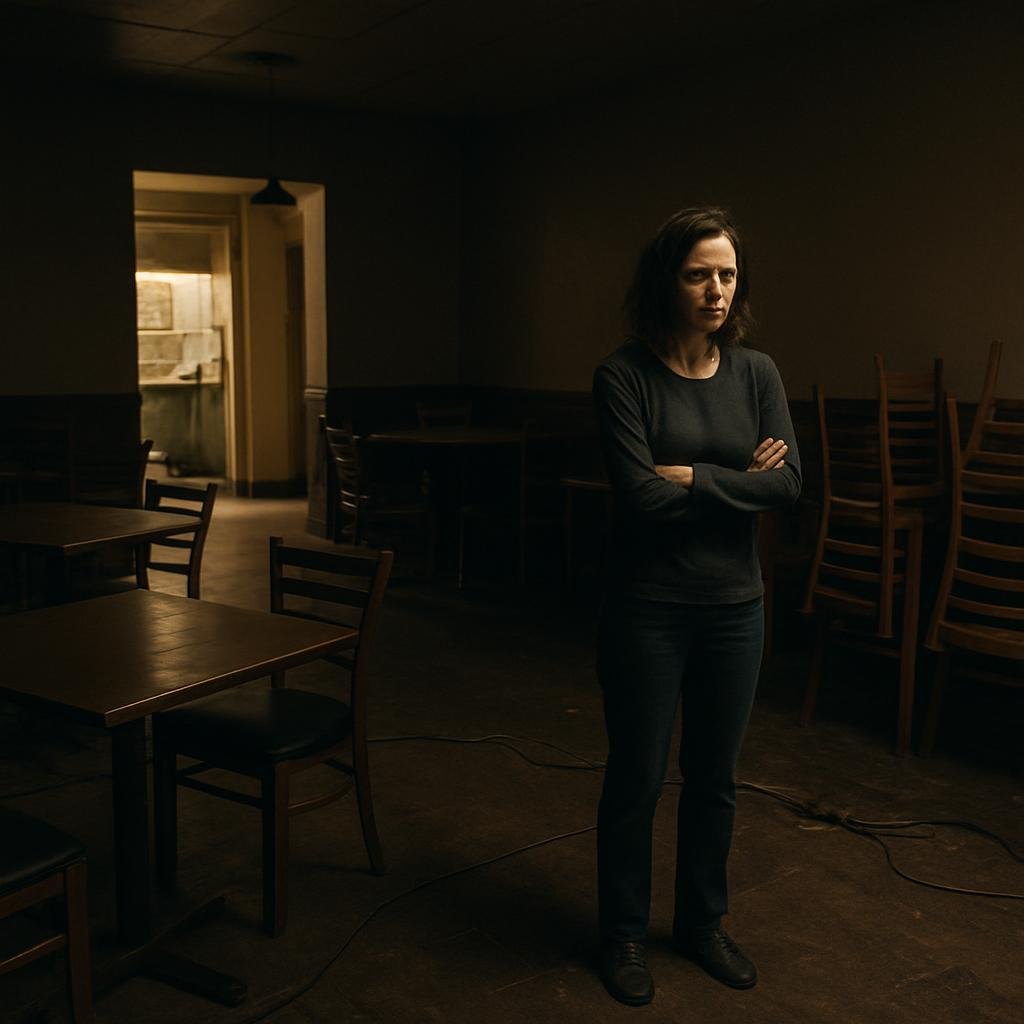
By sunrise, my dining room looked like a warehouse after an auction.
Then my mother called and said,
“Now you have nothing left to protect.”
She was wrong.
What my family did not know was that twelve days earlier, almost every major piece of equipment they removed had legally stopped belonging to me.
My name is Natalie Brooks.
I was thirty-eight years old when my parents decided the restaurant I had spent fourteen years building should be sacrificed because my brother could not pay his debts.
My restaurant was called Laurel & Rye.
It sat on a busy corner in Charlotte, North Carolina, inside a renovated brick building that used to be a printing shop.
It was not enormous.
Ninety-two seats.
An open kitchen.
A small private dining room.
A bar with dark walnut shelves.
But getting it there had nearly broken me.
I started cooking professionally at nineteen.
I worked breakfast shifts at hotels.
Late nights in restaurant kitchens.
Weddings.
Corporate events.
Anything that paid.
At twenty-four, I started a tiny catering business from a shared commercial kitchen.
At twenty-eight, I opened Laurel & Rye with six employees and enough debt to keep me awake for months.
The first year was brutal.
I cooked.
Managed payroll.
Answered reservation calls.
Fixed broken sinks.
Delivered catering orders in my own car.
I knew every corner of that restaurant.
Every scratch on the butcher-block counter.
Every temperamental burner on the old range.
Every employee who had stayed late when someone called out sick.
By year five, we were profitable.
By year eight, reservations were booked weeks ahead on weekends.
By year fourteen, we had thirty-six employees and had been featured in regional food magazines.
That restaurant was not something I could simply replace.
My younger brother Jason never understood that.
Jason was four years younger than me.
For most of his adult life, he had survived by convincing people that his next idea would fix his previous mistake.
Crypto.
Short-term rentals.
Imported furniture.
A mobile car-detailing company.
Then commercial real estate.
Every time something failed, he blamed timing.
The economy.
A partner.
The market.
Never himself.
My parents believed him.
They always had.
When Jason dropped out of college, Dad paid his credit cards.
When his first business collapsed, Mom gave him thirty thousand dollars from her retirement savings.
When he bought an expensive truck he couldn’t afford, Dad called it “necessary for appearances.”
When I needed fifteen thousand dollars to replace Laurel & Rye’s refrigeration system during my second year, my father told me,
“Business owners need to solve their own problems.”
I did.
I remembered that sentence.
Apparently, he didn’t.
Jason’s latest disaster started with an apartment-development investment.
He joined two partners planning to renovate an old commercial property into luxury apartments.
He personally guaranteed several loans.
Then construction costs exploded.
One partner disappeared.
The project stalled.
By the time Jason told anyone the truth, he owed lenders more than six hundred thousand dollars.
Some of the loans carried his personal guarantee.
One lender had already filed suit.
My parents summoned me to dinner.
Mom had cooked lasagna.
Dad had papers spread across the dining table.
Jason looked exhausted but strangely calm.
That should have warned me.
Dad pushed a folder toward me.
“Jason has a serious problem.”
I opened it.
Bank statements.
Loan documents.
Demand letters.
“How serious?”
Jason stared at his plate.
Dad answered.
“About six hundred and forty thousand.”
I looked up.
“You owe six hundred and forty thousand dollars?”
Jason rubbed his face.
“It’s complicated.”
“It looks pretty simple on paper.”
Mom immediately interrupted.
“He was betrayed by his partners.”
Jason nodded.
“They left me holding everything.”
I kept reading.
Then I saw a valuation report.
Not for Jason’s assets.
For Laurel & Rye.
I slowly looked at Dad.
“Why do you have a valuation of my restaurant?”
He folded his hands.
“Because you have a solution.”
There it was.
I closed the folder.
“No.”
“You haven’t even heard us.”
“I don’t need to.”
Mom leaned toward me.
“Natalie, please.”
Dad continued.
“The restaurant has significant value.”
“So?”
“You could sell it.”
I stared at him.
“You want me to sell Laurel & Rye?”
“You’d get enough to help Jason resolve most of this.”
“And my employees?”
Dad shrugged.
“The buyer might keep them.”
“Might?”
Jason finally spoke.
“You can open another restaurant.”
I laughed.
Not because anything was funny.
Because I genuinely could not believe what I was hearing.
“You think restaurants just appear?”
“You built one before.”
“That took fourteen years.”
Mom touched my arm.
“Family should matter more than a business.”
I pulled my arm away.
“Thirty-six families depend on that business.”
“Jason is your brother.”
“And?”
Dad’s expression hardened.
“And he could lose everything.”
I looked at Jason.
“You already lost everything.”
His jaw tightened.
“That’s not fair.”
“No. What’s unfair is asking thirty-six employees to lose their jobs because you signed loans you couldn’t repay.”
Mom shook her head.
“You always judge him.”
“I’m not judging him.”
I pushed the documents back.
“I’m refusing to become his emergency fund.”
Dad’s voice became cold.
“We helped you build that restaurant.”
That made me angry.
“You loaned me five thousand dollars when I opened.”
“We gave you a start.”
“I repaid you in eleven months with interest.”
Mom said,
“That’s not the point.”
“No. The point is you think anything I build belongs to the family whenever Jason needs rescuing.”
Jason leaned back.
“You’re being dramatic.”
I looked at him.
“You owe six hundred thousand dollars and you’re asking me to sell my livelihood. I’m exactly as dramatic as this situation deserves.”
Dad slammed his hand on the table.
Then came the ultimatum.
Sell Laurel & Rye.
Use the proceeds to help Jason.
Or they were done with me.
No holidays.
No family events.
No relationship.
Mom said,
“If you walk away from your brother now, don’t expect us to forget it.”
I stood.
I picked up my coat.
Then I said,
“You’re threatening to abandon one child unless she financially rescues the other.”
Nobody answered.
I left.
What my family didn’t know was that Laurel & Rye was already in the middle of a major expansion.
For almost a year, I had been negotiating with a hospitality investment company called Hartwell Dining Group.
Hartwell did not want to buy my restaurant.
They wanted to fund two additional locations.
The agreement required Laurel & Rye to upgrade its kitchen, standardize production, and move certain high-value equipment into a new operating structure.
Twelve days before that family dinner, the deal had closed.
Hartwell purchased most of our major equipment and immediately leased it back to Laurel & Rye.
The ovens.
Refrigeration units.
Mixers.
Dishwashers.
Espresso machines.
Wine-storage system.
Several custom stainless-steel prep stations.
Legally, they now belonged to Hartwell Equipment Holdings.
Laurel & Rye had the right to use them.
But I could not sell them.
And neither could anyone else.
The arrangement freed capital for our expansion and protected the company from taking on too much additional debt.
My family knew none of this.
They only saw a successful restaurant filled with things they believed belonged to me.
A week after the ultimatum, Mom called.
“Have you reconsidered?”
“No.”
“Jason’s deadline is approaching.”
“Then Jason should talk to his attorney.”
Dad took the phone.
“You are sitting on hundreds of thousands of dollars in equipment alone.”
I went silent.
That was an oddly specific thing to say.
“How do you know what my equipment is worth?”
He hesitated.
“Common sense.”
I did not believe him.
After the call, I contacted my attorney, Marcus Lee.
I told him what Dad had said.
He became concerned immediately.
“Do your parents have keys to the restaurant?”
“My mother used to have an emergency key.”
“Used to?”
“I changed the locks last year.”
“Alarm code?”
“No.”
“What about Jason?”
“No.”
Marcus paused.
“Make sure your cameras are functioning.”
Laurel & Rye had sixteen cameras.
Most were installed for employee safety, delivery disputes, and insurance.
Two days later, Dad sent me a message.
Last chance.
I did not reply.
That Friday, I closed the restaurant after midnight.
We had served one hundred and seventy-three guests.
I left around 1:20 in the morning.
At 3:46, my phone started buzzing.
REAR SERVICE DOOR OPEN.
ALARM BYPASS FAILURE.
MOTION: KITCHEN.
I sat upright.
Then another alert appeared.
DINING ROOM.
I opened the camera feed.
For several seconds, I could not understand what I was looking at.
My father was standing inside my kitchen.
Jason was beside him.
Three men I had never seen before were disconnecting one of my refrigeration units.
My mother stood near the rear door holding a clipboard.
A box truck was backed into the loading area.
They were emptying my restaurant.
I switched cameras.
Two men were carrying dining chairs outside.
Jason was behind the bar packing bottles of wine into crates.
Dad pointed toward the espresso machine.
“Take that too.”
My mother said,
“What about the freezers?”
Jason answered,
“We can sell anything commercial.”
I felt my hands start shaking.
They had not come to vandalize the restaurant.
They had come to liquidate it themselves.
I called 911.
Then Marcus.
He answered groggily.
“Natalie?”
“They’re taking the equipment.”
“Who?”
“My family.”
He was instantly awake.
“Do not go there.”
“I’m watching them load it into a truck.”
“Police?”
“On the way.”
Marcus went silent for a second.
Then said,
“Call Hartwell.”
I did.
Their emergency corporate line connected me to their operations director.
I explained what was happening.
His first question was,
“Are they removing leased equipment?”
“Yes.”
“How much?”
“Almost everything.”
He said,
“Send me the camera link.”
At 4:03, police arrived.
But chaos had already begun.
The people helping my family apparently believed they were conducting a legitimate repossession or liquidation.
Dad had told them the restaurant was closing.
Jason had hired them in cash.
The first truck already contained an industrial mixer, wine-storage equipment, dining chairs, small appliances, and crates of wine.
The second truck had arrived for the refrigeration units.
The police separated everyone.
I arrived only after an officer told me it was safe.
The dining room looked hollow.
Tables had been stacked.
Shelves emptied.
The kitchen floor was covered with disconnected lines and cables.
My mother saw me and immediately started yelling.
“This didn’t have to happen!”
I stared at her.
“You emptied my restaurant.”
Dad stepped forward.
“We are selling enough to solve this.”
“Selling what?”
“The equipment.”
I almost couldn’t believe he said it so confidently.
Jason pointed toward the kitchen.
“You’ll still have the property and the brand.”
“You planned to sell my kitchen without my permission?”
Dad snapped,
“You left us no choice.”
One of the officers looked at him.
“Sir, you understand you cannot sell property that doesn’t belong to you?”
Dad said,
“It belongs to my daughter.”
I looked directly at him.
“No.”
He frowned.
“What?”
“The equipment doesn’t belong to me.”
Silence.
Jason actually laughed.
“What are you talking about?”
I pointed toward the industrial mixer sitting on the truck.
“That belongs to Hartwell.”
Then the refrigeration unit.
“Hartwell.”
The espresso machine.
“Hartwell.”
The dishwashers.
“Hartwell.”
“Most of the equipment you just removed became corporate leased property almost two weeks ago.”
Dad’s face changed.
Mom stared at me.
Jason said,
“You sold the restaurant?”
“No.”
I looked at him.
“I expanded it.”
The Hartwell representative arrived thirty minutes later with counsel.
That was when my family finally understood how serious the situation had become.
They had believed they were interfering with my personal property.
Instead, they had removed hundreds of thousands of dollars in equipment owned by a national hospitality company.
And there was another problem.
Some of it had already been damaged during removal.
A refrigeration compressor had been tipped improperly.
The espresso machine had been dropped.
One stainless-steel unit had been dragged across the floor, damaging both the equipment and tile.
Hartwell’s attorney immediately requested that police preserve everything.
The trucks.
The contracts with the movers.
The messages between Jason and the men he hired.
The security footage.
Then one of the movers said something that changed the entire investigation.
“Jason told us he owned half the restaurant.”
I looked at my brother.
He looked away.
The officer asked,
“Is that true?”
“No.”
Jason had never owned one percent of Laurel & Rye.
The mover pulled out his phone.
Jason had sent him a message the previous afternoon.
My sister is being forced to close. I’m authorized to liquidate everything this weekend.
I read it twice.
My mother started crying.
Dad blamed Jason.
Jason blamed Dad.
And while they argued, one of the officers quietly asked me,
“Do you want to pursue charges?”
I thought about my employees.
Thirty-six people scheduled to arrive in a few hours expecting to work.
I thought about fourteen years of sixteen-hour days.
Then I looked at my family.
“Yes.”
The restaurant could not open that Saturday.
Or Sunday.
But Hartwell moved faster than anyone expected.
Because we were already preparing for expansion, they had equipment stored at a warehouse less than forty miles away.
Temporary refrigeration arrived Saturday afternoon.
Replacement prep equipment followed.
We deep-cleaned the kitchen.
Electricians repaired damaged connections.
My staff volunteered to help.
By Tuesday evening, we reopened.
There was a line outside.
Someone had leaked the story to local media.
I refused interviews.
I did not want publicity.
I wanted my restaurant back.
My family still seemed convinced I would eventually drop everything.
Three days after reopening, Mom called.
“You need to stop this.”
“Stop what?”
“The police investigation.”
“No.”
“Natalie, your father is sixty-seven.”
“He knew how old he was when he broke into my restaurant.”
“We were desperate.”
“You were stealing.”
“We were trying to save your brother.”
“By committing crimes for him.”
She started crying.
“You’re destroying this family.”
I closed my eyes.
“No, Mom.”
I looked through my office window at my staff preparing dinner service.
“You destroyed our relationship because I wouldn’t let you destroy my business.”
I hung up.
The meeting with attorneys happened two weeks later.
My parents arrived with a lawyer.
Jason had his own.
I sat beside Marcus.
Hartwell sent two representatives.
Their attorney began.
“The equipment removed from Laurel & Rye had an insured replacement value exceeding three hundred and seventy thousand dollars.”
Dad went pale.
“We didn’t keep anything.”
“That is not the issue.”
She continued.
“Several items were damaged during unauthorized removal.”
Then Marcus laid out photographs.
Dad inside the kitchen.
Mom holding the inventory list.
Jason directing movers.
Crates being carried into the truck.
Then he played the security audio.
My father’s voice filled the conference room.
Once she sees an empty kitchen, she’ll finally sell.
My mother replied,
“She should have helped him when we asked.”
Jason said,
“We only need enough to keep the lender off me.”
Nobody spoke after that.
Their attorneys asked for a break.
When they returned, their tone had changed completely.
The criminal process took months.
Hartwell also pursued civil recovery for damaged equipment and emergency costs.
The insurance companies became involved.
The moving company cooperated after demonstrating they had been misled.
My father eventually accepted a plea agreement involving restitution and probation.
My mother received probation and community service for her role.
Jason faced more serious consequences because investigators determined he had organized the removal, misrepresented ownership to the movers, and intended to sell the equipment.
He avoided a lengthy custodial sentence through a negotiated plea, but restitution, legal costs, and his existing debt destroyed what remained of his finances.
He filed for bankruptcy.
His investment property went into foreclosure.
His truck was repossessed.
The private lender obtained a judgment.
My parents took money from their retirement accounts to help with attorneys.
For years, they had prevented Jason from feeling consequences.
This time, they couldn’t.
I expected that to feel satisfying.
Mostly, it felt exhausting.
What felt satisfying came fourteen months later.
Laurel & Rye opened its second location in Raleigh.
Six months after that, we opened a third.
Hartwell promoted our executive chef into a regional position.
Four of my longtime employees became managers.
Two received equity incentives.
And I became culinary director for the growing brand while retaining a significant ownership stake.
One evening, I visited the original Charlotte restaurant after closing.
The dining room was quiet.
The bar lights were low.
Someone in the kitchen was baking bread for morning service.
I walked past the spot where the espresso machine had been ripped away from the counter.
You could no longer see the damage.
Everything had been repaired.
There was one thing I kept.
A small inventory tag that had fallen from the equipment during the break-in.
Hartwell Equipment Holdings.
Property ID 44718.
I framed it inside my office.
Not because I cared about the equipment.
Because it reminded me of the moment my family made their biggest mistake.
They thought the ovens were my restaurant.
They thought the chairs were my restaurant.
They thought emptying the building meant emptying my life.
They never understood what Laurel & Rye really was.
It was thirty-six employees who showed up on Saturday morning and asked how they could help.
It was customers waiting outside when we reopened.
It was recipes we had perfected for years.
Relationships.
Reputation.
Trust.
Those things could not be loaded into a truck.
My parents tried to take everything because I refused to pay for my brother’s mistakes.
Instead, they exposed exactly how far they were willing to go to protect him.
And finally, I stopped protecting them.
They emptied my restaurant.
But they never took what made it mine.
The End