👁 73 views
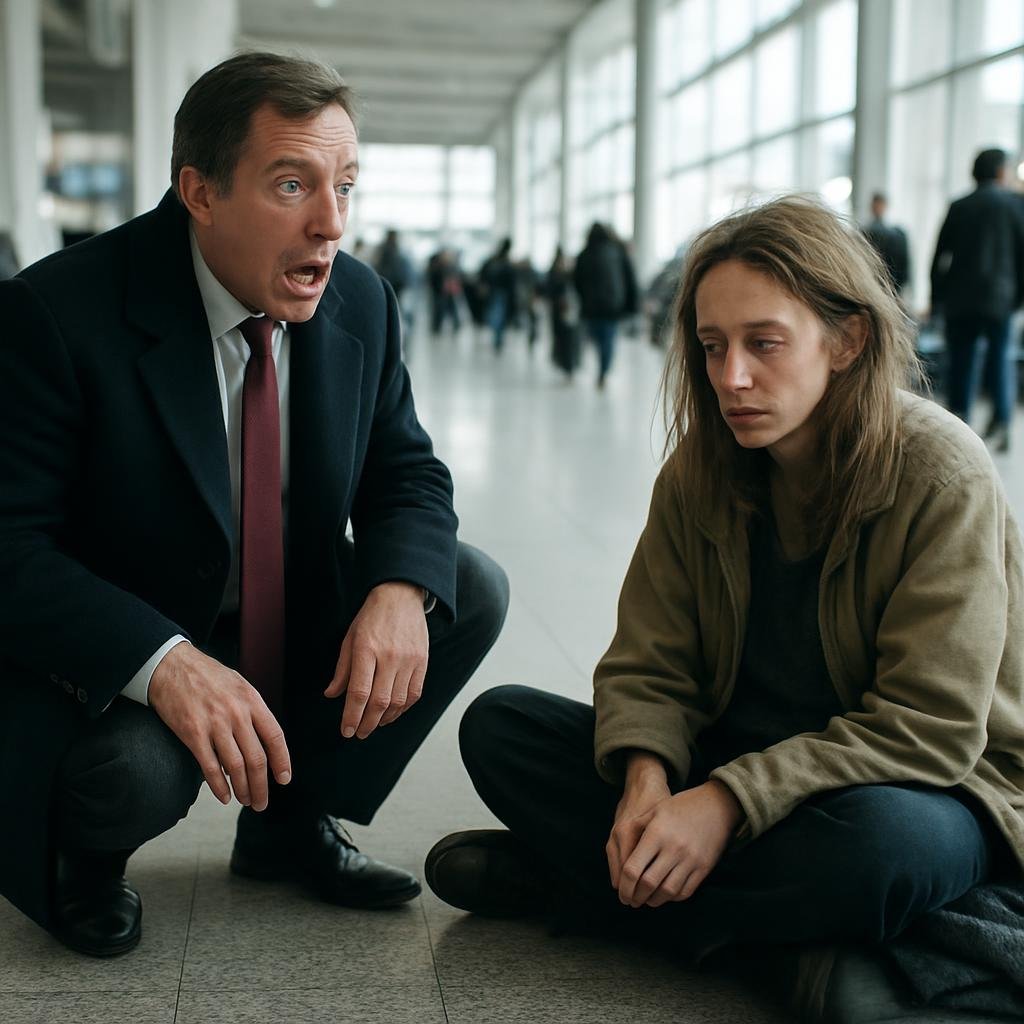
I found my ex, who vanished 6 years ago, sleeping at JFK with 2 kids who had my eyes. Then I heard my mother say, “Their mother should’ve known her place.” I canceled my biggest business deal—then found a legal document with my signature on it that exposed a secret my family had buried for 6 years.
PART 1: The Commotion at O’Hare
I discovered I was the father of five-year-old twin boys on the sterile, freezing marble floor of Terminal 4 at O’Hare International Airport. It was precisely thirty-five minutes after I had viciously cursed a mechanical flight delay—a delay I was certain would sabotage the zenith of my professional life.
At forty-four, I had calcified into a man who worshipped at the altar of punctuality. As the sole proprietor of a luxury boutique hotel empire spanning Miami, Charleston, and Key West, time was my most fiercely guarded currency. That crisp Tuesday morning, I was ticketed for Boston to finalize the acquisition of a sprawling historic estate. It was the crown jewel deal of my career, a multi-million-dollar expansion that would solidify my legacy.
I had arrived at the gate with two immaculate hours to spare. Then, the departure monitor overhead bled into a glaring, apocalyptic red: MECHANICAL DELAY – INDEFINITE.
I instantly dialed my Chief Financial Officer, pacing the concourse. “Start the board meeting without me,” I barked into the receiver, ignoring the chaotic churn of stranded passengers around me. “I’ll get there the second they clear this aircraft. Stall the sellers.”
Seeking refuge from the suffocating crowd at the gate, I retreated toward the expansive floor-to-ceiling windows overlooking the tarmac, cracking open my laptop. I didn’t even make it through the first paragraph of my financial summaries before a sharp, piercing voice shattered my concentration.
“Watch where you’re pushing that filthy cart, you blind old bat! Do you have any idea how much this luggage costs?”
I snapped my laptop shut, irritation flaring. A few yards to my left, an entitled twenty-something woman—draped in a pristine white Chanel blazer and oversized sunglasses—was ruthlessly berating an elderly, frail janitor. The older woman’s cleaning cart had seemingly grazed the edge of the spoiled heiress’s gleaming aluminum suitcase. The elderly woman was bowing her head, stammering apologies in broken English, her hands trembling violently against the handle of her mop.
The heiress sneered, stepping closer to intimidate the terrified worker. “You should be fired for—”
“She apologized,” a new voice sliced through the heavy airport air. It was a firm, steady reprimand, lacking any volume but vibrating with an undeniable authority. “There is absolutely no need to speak to her as if she is subhuman. Wipe the smudge off your bag and move on.”
I froze. The blood in my veins turned to ice.
I knew that voice. I had dreamed about that voice for half a decade.
I slowly turned my head. Standing between the vicious young traveler and the trembling janitor was a woman dressed in a faded oversized sweater and worn denim. She was alarmingly thin, her cheekbones sharp and hollowed by exhaustion, but the defiant, fiery posture was unmistakable. When the spoiled girl huffed, rolled her eyes, and stormed off toward the VIP lounge, the woman turned, offering a gentle, reassuring smile to the janitor.
Then, she brushed a stray lock of hair behind her right ear. It was the exact, delicate, heartbreaking mannerism that had haunted my memories.
Evelyn.
The woman who had completely vanished from the face of the earth six years ago.
The laptop nearly slipped from my grip. I stood paralyzed, watching her walk back to a scuffed, fraying blue suitcase resting against the wall. Beside it, curled together on a thin blanket spread over the cold tiles, were two small sleeping boys.
For six agonizing years, I had desperately tried to bury Evelyn’s memory under a mountain of grand ribbon-cuttings, cutthroat investor negotiations, transatlantic flights, and hollow business dinners. My mother, Eleanor Vance, the iron-fisted matriarch of our family’s foundation, had hand-fed me a comforting, devastating narrative. She had repeated it so relentlessly that I had eventually choked it down as the gospel truth.
“Evelyn realized she didn’t belong in our echelon, Marcus,” my mother had purred over a crystal glass of bourbon years ago. “She felt overwhelmed by the Vance legacy. Let her walk away with her dignity intact.”
I had swallowed the lie because the alternative—that the only woman I ever truly loved had simply grown tired of me and fled—was a psychological agony I couldn’t bear.
We had met when she was a thirty-one-year-old event coordinator managing a charity gala for my family’s philanthropic wing. I was thirty-five, wealthy, and profoundly bored with my life. She was a lightning bolt. Evelyn wasn’t intimidated by my surname; she actively challenged my archaic business views, and she possessed a brilliant, infectious laugh that mocked the stuffy, suffocating traditions of Chicago’s elite.
Eleanor had despised her from the moment they shook hands.
“Enjoying the company of a working-class girl is one thing, Marcus,” Eleanor had warned. “Diluting our bloodline and building a family legacy with one is quite another.”
Two months after that argument, I was dispatched to Europe for three weeks to salvage a collapsing hotel deal. When I returned, Evelyn’s apartment was stripped bare. Her phone number was disconnected. My desperate letters were returned, stamped with cold red ink. My mother assured me, with an expression of profound pity, that Evelyn had explicitly begged our legal team to ensure I never contacted her again.
Wounded, humiliated, and armed with far too much pride, I stopped hunting for her.
Now, she was ten feet away from me.
Suddenly, one of the little boys stirred. He rubbed his eyes, yawning widely, and sat upright against the peeling blue suitcase.
All the oxygen evaporated from my lungs.
The child possessed my thick, dark, unruly hair. He had the exact, unmistakable square jawline of my late father. But it was the final detail that felt like a physical blow to the chest: a distinct, tiny notch in his left eyebrow—the precise genetic anomaly I stared at in my own reflection every morning while dragging a razor across my face.
Evelyn slumped down against the wall, pulling the boy close. She turned her head, sweeping her gaze across the terminal.
When her eyes finally collided with mine, every single drop of color violently drained from her face. She looked as though a corpse had just clawed its way out of the grave. Instinctively, she threw her arms over both sleeping boys, pulling them aggressively into her chest, shielding them from me.
I took a slow, trembling step forward. “Evelyn.”
She pressed her back hard against the glass window, her breathing shallow and frantic. “It… it can’t be.”
“I’ve been telling myself the exact same thing for six years,” I choked out, my voice fracturing.
Evelyn pressed her pale lips together. She looked down at the boy in her arms, tracing the curve of his face, then looked back up at me. Her eyes were suddenly brimming with a terrifying, chaotic mixture of profound grief and sheer terror.
“Marcus,” she whispered, her voice shaking so badly I could barely hear it over the terminal announcements. “Your mother never told you, did she?”
PART 2: The Gray Folder
For several agonizing seconds, the world around me went entirely deaf. The ambient noise of rolling luggage and chattering crowds faded into a low, buzzing static.
“Told me what?” I managed to rasp, my throat lined with sandpaper.
Evelyn slowly released her vice-like grip on the children. The older twin opened his eyes, blinking away the sleep. He stared up at me with an expression so intensely, undeniably familiar that my heart slammed violently against my ribs.
“Their names are Leo and Toby,” she said softly, her guard remaining firmly raised.
“How old are they?”
“Five.”
My knees gave out. I didn’t care about my tailored suit, the staring pedestrians, or my billion-dollar dignity. I dropped heavily to the cold airport floor, bringing myself down to their eye level. “Are they mine?”
Evelyn didn’t speak. She just nodded once, a single, sharp jerk of her chin.
Without breaking eye contact, she reached into her frayed canvas tote bag. She dug past a plastic bag of sliced apples and a handful of toy cars, pulling out a thick stack of papers bound by a cracked rubber band. She tossed it onto the tiles between us.
There were dozens of unopened envelopes, all addressed to my private office in Chicago, every single one branded with a brutal RETURN TO SENDER stamp. Beneath them were printed logs of emails dispatched to a private corporate server I had been told was decommissioned years ago.
Finally, she slid a piece of heavy parchment across the floor. It was a canceled cashier’s check.
The amount was $60,000. The signature at the bottom, rendered in sweeping, arrogant calligraphy, belonged to Eleanor Vance.
“Your mother ambushed me with this check and a non-disclosure agreement to make me disappear,” Evelyn said, her voice dropping into an icy, venomous whisper. “I refused it. I told her I only wanted to speak to you. Three days later, her lawyers informed me that you were already fully aware of the pregnancy, that you considered me an opportunistic parasite, and that you wanted absolutely nothing to do with your bastards.”
I felt the blood drain from my face. A cold, nauseating dread coiled deep in my intestines. “Evelyn… I swear to God Almighty. I never knew. I never saw these letters.”
“I can see that now,” she whispered, a singular tear finally breaking free and tracking through the exhaustion on her cheek.
She quickly explained the fallout. Three days after rejecting Eleanor’s bribe, her landlord inexplicably canceled her lease. She was blacklisted from three event management agencies within a week. Finally, a formal courier served her with a restraining order warning, drafted by our family’s corporate attorney, threatening her with extortion charges if she ever stepped foot near a Vance property again. Terrified of losing her children to my family’s infinite legal resources, she fled across state lines.
“Why are you back in Chicago now?” I asked, my voice barely recognizable to my own ears.
Evelyn’s eyes darted nervously toward the departure monitor. “Because eight months ago, I got a job offer here. I thought enough time had passed. But last week… your mother found us again.”
Suddenly, the smartphone in my breast pocket began to vibrate violently.
MOTHER Calling…
I stared at the screen, a sickening realization dawning on me. I slid my thumb across the glass and lifted it to my ear. I didn’t say a word.
Eleanor spoke with the chilling, composed authority of a monarch. “Marcus, step away from them immediately. Do not believe a single syllable that filthy woman utters.”
I slowly pushed myself off the floor, my muscles coiled tight as a loaded spring. I scanned the massive, crowded terminal. “How do you know I’m standing with her, Mother?”
Evelyn gasped, pointing a trembling finger over my shoulder.
I spun around.
Standing exactly fifty yards away, near the entrance of the VIP security checkpoint, was my mother. She was impeccably dressed in a tailored charcoal suit, her posture rigid and unyielding. Flanking her right side was Raymond Vance, my uncle and our family’s senior corporate counsel.
Raymond looked nervous, sweating under the terminal lights. He was clutching a thick, gray legal folder tightly against his chest.
Even from fifty yards away, my 20/20 vision caught the bold, black typography stamped across the front of the cardboard cover:
LEO VANCE MONTGOMERY
TOBY VANCE MONTGOMERY
PART 3: The Forgery and The Fracture
I didn’t walk; I marched. I cut a furious, devastating path through the sea of delayed travelers, moving with a dark, predatory momentum that forced people to physically jump out of my way.
“Hand me that folder, Raymond,” I snarled, stepping directly into my uncle’s path, invading his personal space until he was forced to step backward.
Raymond tightened his knuckles around the gray cardboard, glancing at my mother for permission. “Marcus, take a breath. This is completely inappropriate. A public terminal is not the venue to discuss highly sensitive estate liabilities.”
“Liabilities?” I hissed, the word tasting like battery acid in my mouth. “Is that what we’re calling a mother and my two five-year-old sons now? Hand me the damn file, or I will break your fingers and take it.”
My mother remained an immovable statue of aristocratic ice. At sixty-eight, Eleanor possessed the terrifying ability to deliver a ruthless corporate execution with the polite tone of ordering a cup of tea. “You are acting like an emotional amateur, Marcus. She staged this encounter. She tracked your flight itinerary and orchestrated this pathetic display for a payday.”
“I didn’t stage a damn thing!” Evelyn had followed me, stopping a few feet behind my shoulder, instinctively pulling Leo and Toby behind her legs. “We were trying to board a Greyhound bus out of the city, but the terminal was closed. We came here to get standby tickets to Denver.”
Eleanor didn’t even afford Evelyn the dignity of a glance. She kept her piercing blue eyes locked onto mine. “Marcus, you have a seventy-million-dollar closing in Boston in exactly four hours. Do not throw away a decade of corporate strategy for a beggar’s unverified fairytale.”
I pointed a shaking finger back toward Evelyn’s open bag. “I just saw her returned letters, Mother! I saw the sixty-thousand-dollar cashier’s check with your goddamn signature on it!”
“Paperwork proves nothing regarding biological paternity,” Eleanor countered smoothly, not missing a beat.
“No,” I growled, taking a step closer to the woman who gave birth to me. “But it absolutely proves that someone illegally intercepted my private mail and hijacked my life for six years.”
Raymond cleared his throat, attempting to broker peace. “Marcus, if we could just proceed to the boardroom—”
“What is in the folder, Raymond?” I roared, no longer caring who in the airport was watching us. “Hand it over in the next three seconds, or you are terminated as corporate counsel, stripped of your board seat, and barred from every property I own before I even board a plane.”
Raymond looked at my mother. He hesitated.
That microsecond of hesitation was all the confession I needed.
I lunged forward, snatching the heavy folder violently out of his manicured hands. The metal clasp tore open, spilling documents over my arm.
I stared at the contents, my stomach violently dropping into an abyss. It was a private investigator’s dossier. There were dozens of surveillance photographs of Evelyn pushing a grocery cart, walking the boys to a local preschool, sitting in a laundromat. There were copies of their daily schedules, mapped out routes. Beneath the photos was a drafted, unsigned legal settlement.
My mother was preparing to offer Evelyn a staggering $200,000 buyout.
The terms, typed in crisp, soulless legalese, demanded absolute, irrevocable non-disclosure. It required the immediate surrender of all past correspondence and mandated that any future mention of the Vance bloodline be routed exclusively through Raymond’s law firm.
A wave of profound, violent nausea washed over me. I stared at the woman who had raised me, feeling like I was looking at a complete stranger. “You hired a private investigator to stalk my children?”
“I authorized a discreet inquiry to investigate minors whose legal status was completely unverified,” Eleanor corrected, her tone devoid of a single shred of human remorse. “It was a standard corporate risk assessment.”
“Show him the other document, Marcus.”
Evelyn’s voice was barely a whisper, but it cut through the terminal’s noise like a scythe. She reached into a hidden, zippered compartment of her battered blue suitcase. Her hands were shaking uncontrollably as she pulled out a single sheet of paper, folded precisely into quarters.
She handed it to me.
It was printed on my luxury hotel group’s heavy, embossed corporate letterhead. The date was stamped six years ago. The text was brutally succinct: it stated, unequivocally, that I was fully aware of the twin pregnancy, that I harbored zero desire to establish a relationship with Evelyn or the resulting offspring, and that any further contact would be met with severe legal retaliation.
At the bottom of the page sat my signature.
I stared at the blue ink for three agonizing seconds. The world tilted on its axis.
“I never signed this document,” I breathed, the realization choking me.
Evelyn closed her eyes, letting a fresh wave of tears spill down her hollowed cheeks. For six grueling years, she had harbored a toxic, suffocating hatred for that single piece of paper. She had reread those cruel words during late-night emergency room visits, on fatherless birthdays, while struggling to fill out emergency contact forms at preschool, and every single time one of our sons asked why the other kids had daddies at the playground.
Raymond turned a sickly, translucent shade of gray.
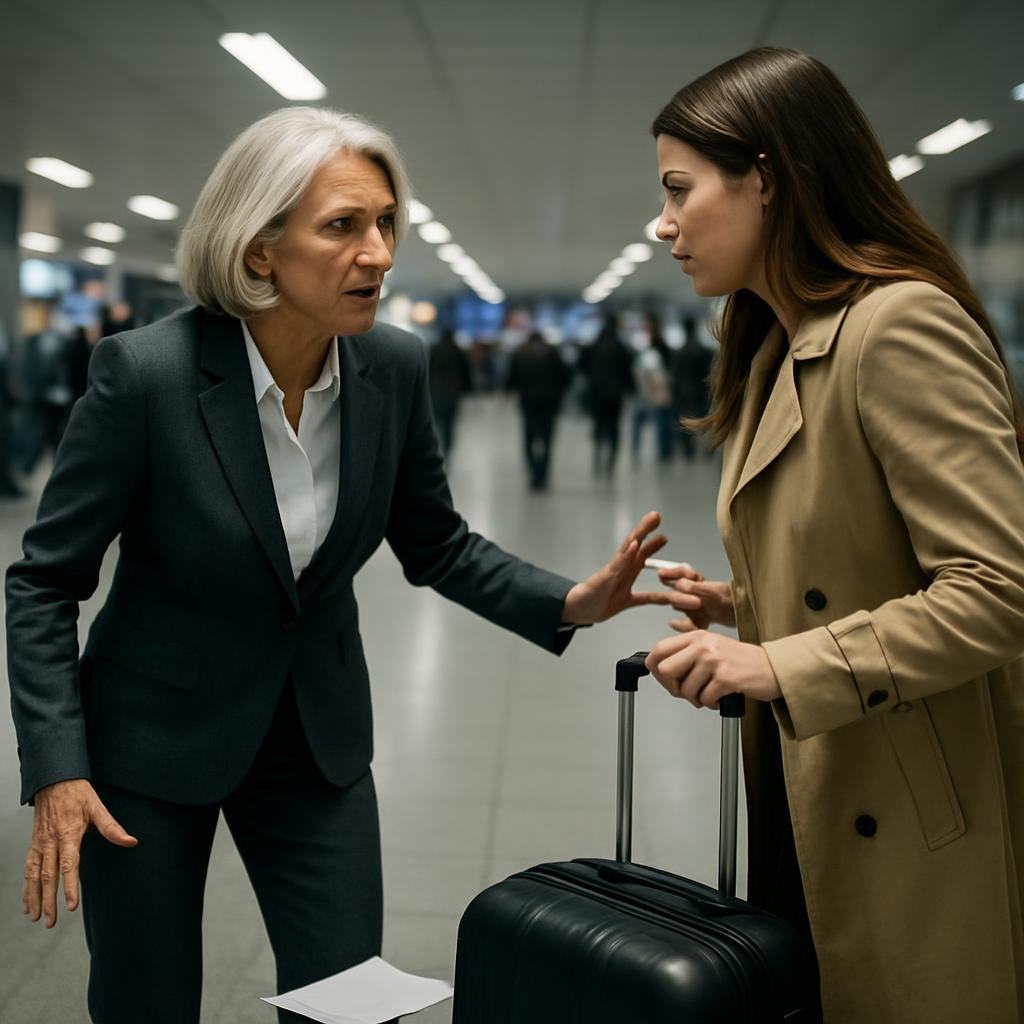
My mother, however, didn’t even blink. “It was the absolute best decision for everyone involved, Marcus. I excised a tumor before it could kill the host.”
The silence that descended upon our small circle was suffocating.
“You forged my signature?” I asked. My voice had dropped into a low, dangerous register that I barely recognized as my own.
“I prevented you from making a permanent, catastrophic mistake,” Eleanor replied smoothly, adjusting the cuffs of her blazer. “You were infatuated, Marcus. You weren’t thinking of the board, the stakeholders, or the legacy.”
“They are my sons!” I bellowed, the sound tearing from my throat.
My mother finally turned her gaze toward Leo and Toby, who were shrinking behind Evelyn’s legs. There was no warmth, no grandmotherly affection in her pale eyes—only the cold, aristocratic calculation of a CEO looking at a bad debt.
“Those children didn’t need a father, Marcus,” Eleanor said, her voice dripping with venom. “Their mother simply needed to understand her place in the world.”
Evelyn flinched violently, as if my mother had struck her across the jaw.
I didn’t yell again. I didn’t throw a punch. The rage inside me crystallized into something infinitely more dangerous: absolute clarity.
I pulled my phone from my pocket and dialed my CFO. “Cancel the Boston acquisition entirely. Tell the sellers we are walking away.” Before he could stammer a reply, I hung up and dialed my Chief Information Officer. “Initiate a complete lockdown on all corporate servers. I want every single historical email, server backup, and mail log associated with Eleanor Vance and Raymond Vance preserved immediately. Freeze their security clearances.”
Finally, I flagged down two armed airport security officers patrolling near the VIP lounge. I pointed directly at my mother and uncle. “These individuals are harassing my family. I want them escorted out of this terminal immediately.”
Eleanor stared at me, her flawless composure finally shattering into absolute disbelief. “You are destroying your own family, Marcus! Over a common—”
“No,” I interrupted, stepping into her space and looking her dead in the eye. “I am finally uncovering who destroyed my family six years ago. You are dead to me, Eleanor.”
Raymond dropped his leather briefcase onto a nearby chair. His hands were trembling violently. “Eleanor… I cannot participate in this crusade any longer. I’m done.”
That single phrase from her most loyal soldier broke my mother’s iron facade. She looked suddenly frail, a deposed queen standing in the ruins of her own arrogance.
Raymond turned to me, begging to speak privately, but I refused. Any confession he had would be delivered directly in front of the woman he had helped terrorize.
Right there in the concourse, Raymond admitted that my mother had explicitly instructed his firm to sever all contact with Evelyn. He confessed that he had never personally witnessed me sign the brutal letter, assuming the signature had been authorized via Eleanor’s broad corporate power of attorney. Worse, he admitted that when Evelyn rejected the initial bribe, my mother had ordered him to escalate the legal threats to ensure she fled the city limits.
“I should have bypassed her and verified it directly with you, Marcus,” Raymond stammered, wiping sweat from his brow.
“Yes,” I said softly, my voice devoid of any forgiveness. “You should have. Expect to hear from my litigators.”
My mother turned on her heel and walked toward the terminal exit without uttering another word. No one tried to stop her.
What I did next was the only thing that mattered.
I ignored the staring crowd and dropped down to the cold floor, bringing myself to eye level with my sons. Leo was staring intently at his scuffed sneakers. Toby was still fiercely clutching the handle of the worn blue suitcase.
“Are you really our dad?” Leo asked quietly, his voice a tiny, fragile melody.
I heard Evelyn catch her breath behind me, a soft, wounded sound.
“I am,” I answered gently, making sure to keep my hands visible and non-threatening. “And we are going to figure all of this out together. But there is one very important thing I need you to know right now: your mom tried everything in her power to find me. She fought so hard for you. I just never knew.”
Toby frowned, his little brows furrowing in deep concentration. “So… you weren’t mad at us?”
That innocent, devastating question shattered a dam deep inside my chest. “I could never, ever be mad at you, buddy. I didn’t even know you existed until today. But I am here now. I promise you, I am here.”
I didn’t force a clumsy hug on them, nor did I offer a delusional promise to instantly make up for six stolen years in a single afternoon. I simply smiled and asked if they were hungry.
PART 4: The Rebuilding
An hour later, the four of us were huddled in a quiet corner booth of an airport café, surrounded by half-eaten sandwiches and juice boxes. My black coffee sat entirely untouched, growing ice cold.
Evelyn answered my questions with guarded caution, like a prisoner of war who had learned that sharing intel could be weaponized against her. I absorbed every detail like a starving man. I learned that Leo possessed a borderline obsessive fascination with geography, easily rattling off state capitals. Toby was a mechanical savant who loved dismantling plastic toys to study their gears, even if reassembly eluded him.
Evelyn had survived by working grueling hours as an administrative assistant at a free medical clinic, raising the twins in a cramped apartment with the help of her younger sister during the hardest years. They had only returned to Chicago eight months ago for a better-paying clinic management position. That was when my mother’s private hounds had picked up their scent.
First came the intimidating legal summons from Raymond’s firm. Then the silent phone calls. Finally, Evelyn noticed the same ominous black sedan idling near the boys’ preschool. Recognizing the escalating threat, she had pulled the kids from school, packed a single suitcase, and rushed to O’Hare to buy standby bus tickets out of state, desperate to consult a legal aid lawyer in Denver.
Our collision in Terminal 4 hadn’t been orchestrated by fate, God, or my mother. It was simply a thirty-five-minute mechanical delay.
That evening, I booked two sprawling, adjoining penthouse suites at my flagship Chicago property. Evelyn accepted the shelter only after I explicitly registered the reservation under her maiden name and mandated that hotel security deny my mother entry to the entire city block. She also agreed to a court-admissible DNA test, insisting on choosing an independent laboratory with her own legal aid attorney present.
Five days later, the courier delivered the sealed envelope to my desk.
Probability of Paternity: 99.99%.
I read the stark black numbers alone in my corner office. I sat frozen in my leather chair for ten uninterrupted minutes. Then, I walked over, locked the heavy oak door, collapsed onto the sofa, and wept with a violent, agonizing intensity I hadn’t felt since my father’s funeral.
I didn’t cry because of the scientific confirmation. I cried for the unrecoverable ghosts of five missed birthdays. I mourned five Christmases, their clumsy first steps, their garbled first words. I grieved for the late-night fevers I wasn’t there to soothe, the scraped knees I didn’t bandage, and the thousands of ordinary, fleeting, precious moments that had been permanently stolen from my life.
When I met with Evelyn the following morning, I didn’t offer a hollow, generic apology for an absence I hadn’t orchestrated. I apologized for something far more profound: for blindly accepting my mother’s convenient, painless narrative six years ago without ripping the earth apart to verify it.
“I should have searched for you harder,” I confessed, the guilt heavy on my tongue. “I let my pride win.”
Evelyn stared into her teacup, the silence stretching between us. “And I should have questioned that forged letter more closely. But I was pregnant, terrified, utterly alone in a massive city, and a billion-dollar legal machine was threatening to crush me. We both believed a lie because it was masterfully engineered to look exactly like the truth.”
That honest, painful conversation was the genesis of our real story. It wasn’t an explosive, cinematic romance; it was a slow, deliberate, brick-by-brick reconstruction of trust.
I ruthlessly gutted my executive schedule. I delegated operational control to my deputies so I could exist in spaces where Leo and Toby felt safe. I walked alongside Evelyn to drop them at preschool. I learned the critical nuances of my sons: Leo despised the texture of crushed tomatoes, Toby suffered night terrors if the closet door wasn’t cracked exactly two inches, and both were bloodthirsty competitors at Monopoly.
The first time Toby called me “Dad” was a complete, beautiful accident.
We were huddled over the living room rug, building a complex plastic model of a Boeing 747. A tiny plastic landing gear wheel slipped from his fingers and rolled under the coffee table.
“Dad, can you pass me that wheel?” he mumbled, his eyes totally focused on the airplane’s fuselage.
The oxygen sucked out of the room. All three of us went completely, absolutely still.
Toby looked up, his cheeks flushing a violent shade of crimson as his own words registered in his brain.
I didn’t make a grand, emotional spectacle out of it. I simply reached under the table, retrieved the tiny piece of plastic, and placed it gently into his palm. “Here you go, buddy. Let’s get that wing attached.”
That night, when I returned to my own apartment, I tucked a spare plastic wheel from the kit into my bedside drawer.
Meanwhile, my corporate IT audit had excavated the horrifying depths of my mother’s architectural deception.
Systems engineers pulled archived, deleted emails from Eleanor’s private server. The digital trail explicitly instructed a former executive secretary to scan my signature onto corporate documents for “urgent, highly classified estate matters.” Another damning thread revealed Eleanor ordering the mailroom supervisor to redirect any personal letters bearing Evelyn’s name straight to Raymond’s shredders.
The retired secretary, terrified of prison time, immediately provided a sworn affidavit confirming she had executed the orders under the belief that my mother possessed my full authorization. Furthermore, subpoenaed telecom records revealed seventeen blocked incoming calls from Evelyn’s cell phone to my private office line during the month she discovered her pregnancy.
Armed with this irrefutable arsenal, Evelyn filed formal criminal complaints for document forgery, fraud, and severe harassment. I voluntarily surrendered all corporate archives to the district attorney. Raymond Vance faced immediate ethics proceedings before the state bar; rather than face a public trial, he surrendered his license to practice law and retired in disgrace.
My mother attempted a final, desperate defense before the board of our family foundation, arguing she had valiantly protected the Vance estate from a gold-digging outsider.
I didn’t shout. I simply walked to the head of the mahogany boardroom table and slapped the certified, 99.99% DNA paternity report down in front of her.
“You didn’t protect the estate, Mother,” I told her, my voice echoing in the cavernous room. “You protected your own grotesque ego. You refused to see the truth.”
With the board’s unanimous backing, I revoked every power of attorney, corporate proxy, and administrative access Eleanor Vance held across my entire portfolio. I didn’t leak the scandal to the tabloids; I simply amputated her from my life, stripping her of the ability to make a single decision for the Vance legacy ever again.
Eight months later, Eleanor formally requested to see the boys. I agreed to meet her, alone, at a secluded downtown restaurant.
She looked aged, the arrogant fire in her eyes replaced by a haunting emptiness. “They are my flesh and blood, Marcus,” she pleaded, her voice finally cracking with genuine vulnerability. “They are my grandsons.”
“They were your grandsons six years ago when you wrote a check to make them disappear,” I replied, sipping my water.
“I made terrible mistakes.”
“No,” I corrected coldly. “You made calculated, predatory choices for six consecutive years. I forgive you, because holding onto this anger is exhausting. But forgiveness and access are not the same thing.”
I handed her a contract. It required her to complete intense family psychotherapy, formally acknowledge her crimes in a written apology to Evelyn, and accept that she would have absolutely zero contact with the children until Evelyn—and a pediatric psychologist—deemed it safe and appropriate.
She signed it with a trembling hand.
The journey to win back Evelyn moved at its own cautious, steady rhythm. I was still profoundly in love with her, but she was far too intelligent to mistake trauma bonding for genuine romance. She had spent a third of her adult life building a fortress without me. I had to learn, with deep humility, that arriving with a billion-dollar net worth and a heart full of regret didn’t grant me a VIP pass back into her bed.
So, I started with the absolute basics: I showed up.
I sat on uncomfortable aluminum bleachers at Little League games. I attended every single parent-teacher conference. I memorized which specific cherry cough syrup Toby tolerated and exactly which binder Leo used for his Pokemon cards. When I traveled to Miami or Charleston, I FaceTimed them at 7:00 PM sharp, never a minute late. When I promised to be standing in their doorway by Friday afternoon, I was standing in their doorway by Friday afternoon.
A year after our collision at O’Hare, Evelyn and the boys moved into a spacious, sun-drenched condominium overlooking Lake Michigan, a mere ten-minute walk from my brownstone. It was not a guilty billionaire’s gift; the lease was fiercely negotiated in Evelyn’s name, and she proudly paid her half of the rent from her clinic director salary, while I fulfilled my maximum legal child support obligations.
One snowy Tuesday evening, while helping them unpack the final boxes in their new living room, Leo was digging through the back of a hall closet. He dragged out the old, battered blue suitcase.
Inside, resting at the bottom, was the stack of returned, unopened letters.
He pulled one out, his small fingers tracing my printed name on the yellowed envelope. “Why did you save all these old letters, Mom?”
Evelyn paused, a stack of books in her arms. She looked across the room at me, a soft, unspoken understanding passing between us.
I walked over and knelt beside my son on the hardwood floor. “Because, Leo… once upon a time, some very confused people tried incredibly hard to make sure those letters never reached me.”
Leo’s brow furrowed as his five-year-old brain processed the logistics. “But… you finally got here anyway, Dad.”
I looked at the worn canvas of the suitcase, its frayed corners a testament to the miles they had run, and the stack of envelopes that had spent six years barricaded from their destination.
“Yeah, buddy,” I smiled, wrapping a heavy arm around his small shoulders and kissing the top of his head. “I finally got here.”
Suddenly, Toby came sprinting down the hallway, launching himself onto my back like a tiny missile, giggling uncontrollably. “You were thirty-five minutes late!”
Evelyn dropped the books and let out a bright, ringing, unguarded laugh—the very first genuine laugh I had heard from her that sounded exactly like the fiery, beautiful woman I had fallen in love with all those years ago.
I had built my entire identity, my entire fortune, around the rigid religion of never keeping anyone waiting. Yet, the most magnificent chapter of my existence had been birthed by a thirty-five-minute flight delay.
And ever since that snowy evening in the condo, I have kept a single, unopened returned letter sitting in a glass frame on my mahogany office desk. I don’t keep it as a bitter monument to the years my mother stole from us.
I keep it as an undeniable, physical truth:
Sometimes, silence doesn’t mean you were abandoned.

Sometimes, someone simply built a massive, impenetrable wall between two people who belonged together. And breaking that wall down—brick by heavy brick—is worth every single second it takes.
The End